Aurora Edge • Enterprise-grade automation for traders

lionfishfactsheet AI Trading Studio

lionfishfactsheet delivers a premium portal that orchestrates autonomous trading bots and AI-powered tooling to codify execution, surveillance, and workflow governance across dynamic markets. The narrative highlights runtime capabilities, setup pathways, and feature nuances crafted for decisive evaluation in modern trading ecosystems. Every section is written for clear, apples-to-apples comparison across automation strategies.

Autonomous trading bots AI-enhanced oversight Execution-flow orchestration Operational dashboards
Comprehensive Snapshot Feature-led design
Automation Core Orchestrated bot flows
AI Insights Layer Support for analytical tasks
24/7 Automation uptime
Cross-Asset Asset coverage
Real-Time Live monitoring

Key Capabilities of the lionfishfactsheet Platform

lionfishfactsheet structures essential abilities around autonomous bots, AI-driven trading assistance, and governance controls that enable repeatable execution workflows. Each card spotlights a core domain typically reviewed in automation stacks. The emphasis remains on tooling behavior, configuration surfaces, and monitoring views that sustain consistent operations.

Execution Path Management

lionfishfactsheet explains how autonomous trading bots can be wired with rule-driven execution flows, scheduling, and operational guardrails. AI-driven assistance supports quick assessment of configuration states and workflow readiness.

Portfolio-aware Oversight

lionfishfactsheet showcases monitoring views that summarize exposure, open positions, and execution activity in a unified layout. AI-enabled tooling accelerates interpretation of portfolio context during active sessions.

Traceable Execution

lionfishfactsheet highlights execution logs, order lifecycles, and audit-friendly summaries for automated trading bots. AI-assisted reviewing supports structured analysis of events and state transitions.

Configurable Governance

lionfishfactsheet presents tunable controls for sizing rules, exposure limits, and session parameters used in automation workflows. AI-enabled components help maintain consistent configuration across strategies.

Operational Dashboards

lionfishfactsheet summarizes dashboard components that present performance metrics, activity summaries, and system status indicators. Automated bots integrate into dashboards for ongoing operational visibility.

Cross-Market Coverage

lionfishfactsheet outlines how automation workflows span multiple market types with consistent operational patterns. AI-assisted trading support enables cross-market comparison and workflow alignment.

lionfishfactsheet Snapshot for Automation Stacks

lionfishfactsheet frames autonomous trading bots as repeatable operational units with defined inputs, execution rules, and monitoring outputs. AI-powered assistance complements this view by expediting review of configuration posture and workflow health. The presentation stays focused on tooling behavior and operational clarity across common trading routines.

Bot execution lifecycle visuals
AI-assisted workflow insights
Exposure sizing controls
Auditable operational logs

Intelligent Assistant Layer

lionfishfactsheet describes AI-powered trading assistance as a layer that supports interpretation of dashboards, configuration states, and execution context for automated trading bots.

Bot Operations Layer

lionfishfactsheet presents autonomous trading bots as modular components with repeatable workflows, controllable parameters, and structured monitoring surfaces for active operations.

Control & Review Layer

lionfishfactsheet highlights controls for exposure, sizing rules, and session boundaries, paired with review-oriented summaries that support consistent operational oversight.

How lionfishfactsheet Maps an Automated Trading Lifecycle

lionfishfactsheet outlines a practical workflow for automated trading bots, starting from configuration and continuing through monitoring and review. AI-powered trading assistance supports operational interpretation at each step. The sequence is presented as interconnected cards to emphasize continuity across trading operations.

Step 1

Configure Bot Parameters

lionfishfactsheet groups configuration into sizing rules, exposure boundaries, and session preferences that define how automated trading bots operate within structured routines.

Step 2

Activate Execution Workflow

lionfishfactsheet describes activation as a controlled transition into automated execution, supported by logs and status indicators designed for operational transparency.

Step 3

Monitor With AI Assistance

lionfishfactsheet highlights AI-powered trading assistance that supports fast review of dashboards, exposure summaries, and event timelines during active bot operations.

Step 4

Review Activity & Adjust

lionfishfactsheet presents review routines that use execution logs and configuration snapshots to refine operational settings for automated trading bots over time.

FAQ: How Lionfishfactsheet Works in Practice

lionfishfactsheet answers common questions about autonomous trading bots, AI-powered trading assistance, and governance controls used in trading workflows. The format presents each question and answer as a chat-style exchange to keep content scannable. Topics focus on functionality, configuration surfaces, and monitoring concepts.

What is lionfishfactsheet used for?

It delivers a structured overview of automated trading bots, AI-driven trading assistance, and the operational capabilities that drive trading workflows.

How does lionfishfactsheet describe automation workflows?

It frames them as repeatable execution sequences governed by configurable parameters, lifecycle logs, and centralized dashboards for monitoring bots.

Where does AI-powered trading assistance fit?

It serves as a supportive layer for interpreting dashboards, reviewing posture, and summarizing execution context.

How is risk handled in automated trading setups?

It outlines common risk controls including exposure caps, sizing rules, and monitoring practices used alongside automated bots.

Is lionfishfactsheet focused on operational transparency?

Yes—execution logs, activity summaries, and review-friendly dashboards support clear oversight for automated trading bots.

Explore lionfishfactsheet Automation Features

lionfishfactsheet centralizes strategic information on autonomous bots, AI-powered trading assistance, and workflow governance used in modern trading operations. The CTA prompts swift navigation back to the lead form for access requests and related materials. The design emphasizes decisive actions and consistent messaging.

Security & Operational Assurance

lionfishfactsheet frames security and reliability as core practices that stabilize automation workflows. Autonomous bots benefit from structured access controls, secure data handling, and vigilant monitoring. AI-powered trading assistance complements these practices by accelerating the review of system status and configuration posture.

Access Controls
Data Handling
Operational Logs
Session Monitoring

Operational Risk Checklist

lionfishfactsheet outlines common risk controls woven into automated trading workflows. The checklist centers on configuration and monitoring practices that sustain consistent governance. AI-assisted insights align with these controls to speed up evaluation of exposure, activity, and workflow posture.

Per-market and per-session exposure caps
Order sizing rules aligned to account thresholds
Live views for open positions and lifecycle status
Execution logs for review and traceability
Session controls and workflow state awareness
AI-assisted summaries for rapid dashboard interpretation

Disclaimer

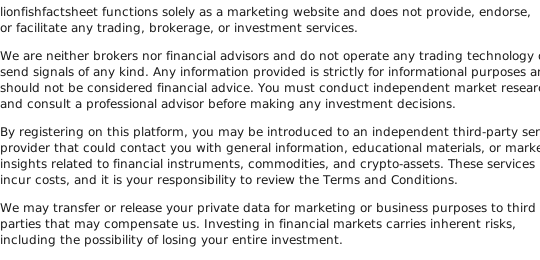
This website functions solely as a marketing platform and does not provide, endorse, or facilitate any trading, brokerage, or investment services.

Read More

Disclaimer Disclaimer